The Year-Round Watch: The Quiet Work That Keeps War Memorials Readable, Safe and Respected
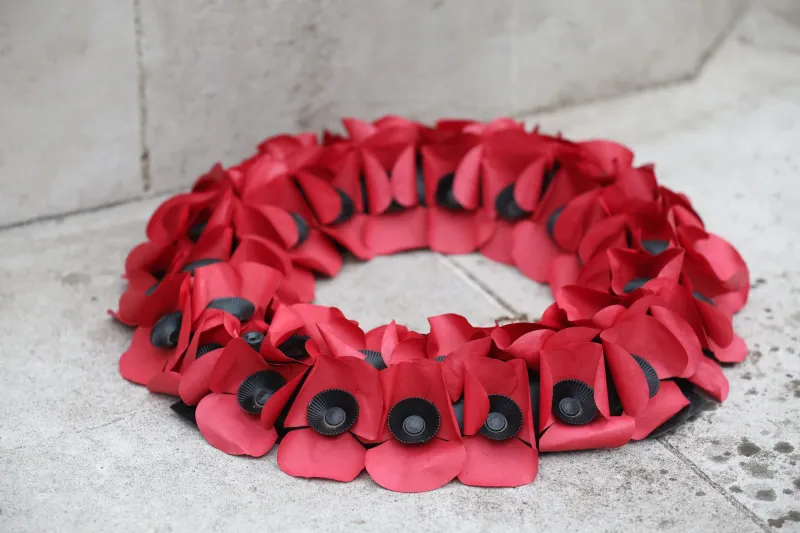
Today is Remembrance Sunday 2026. By the time the last wreath is laid and the last poppy pin is unpinned, most of us will go home. The memorial will still be there: a slab of stone, a cross, a lychgate, a plaque in a shopping centre or an obelisk on a roundabout. It will be there on Monday, on Christmas Eve, on the first warm day of spring and on the wet Tuesday when nobody is looking.
That is the point. A war memorial is not only for the two-minute silence. It is a piece of public heritage that needs the same ordinary care as a roof, a footpath or a village hall. In 2026, that care is a patchwork of volunteers, councils, churchwardens, heritage charities and local history groups. Sometimes it is a single person with a clipboard.
The morning after the wreaths
Once the crowds have gone, the practical questions arrive. Is the inscription still legible? Has water got into a joint? Is the railing loose? Are the wreaths blocking a drain? Has someone tied a plastic poppy to a fragile stone cross with wire that will rust?
A good condition check is not dramatic. It is a slow walk around the memorial with a phone camera and a notebook. Volunteers photograph the same angles each year, note cracks, staining, loose pointing, rust runs and missing fittings, and pass the information to the council, the church or a heritage group. The golden rule is simple: report, do not improvise. A well-meant repair can cause more damage than a small crack.
The War Memorials Trust offers advice and grant support for conservation, while the Imperial War Museums' War Memorials Register records memorials across the UK. Local history societies, civic societies and council conservation officers often hold the practical knowledge. If a memorial is listed, works may need listed building consent. If it sits in a churchyard, there may be additional rules. Asking first is not bureaucracy. It is part of respecting the monument.
The cleaning dilemma
Nothing divides a committee like a bucket. Some people want the stone to look bright and cared for. Others know that jet washers, bleach, wire brushes and strong acids can strip away the very surface that carries the names.
Most conservation advice points the same way: use the gentlest method possible, test on a small area, avoid high-pressure water and never remove lichen or patina without expert advice. A soft brush and controlled low-pressure water may be fine for some surfaces; others need a conservator. A cleaning day should have a coordinator, a method and permission. It should not begin with someone borrowing a pressure washer from a neighbour.
There is also the question of wreaths and tributes. They are part of the story, but they can trap moisture or hide damage. A respectful clear-up after Remembrance Sunday is often welcome, provided it is done with care and the local arrangements are understood.
Names, research and the quiet thrill of accuracy
Some of the most valuable work happens indoors. Local researchers transcribe inscriptions, check spellings and trace the people behind the names. They use newspaper archives, census records, parish records and Commonwealth War Graves Commission records. They compare memorial panels with local rolls of honour. They ask families for photographs and stories.
This is not about making history tidier than it was. It is about making it more honest. A wrong initial, a missing surname or a confused battalion can be corrected in a database or a display, even if the stone itself cannot be changed. That work gives readers a way into the past that a carved list of names cannot always manage on its own.
It is also good company. Research evenings tend to involve tea, spreadsheets, arguments about spellings and the sudden thrill of finding a person in a census return. For anyone who has felt isolated, that is a gentle route back into a shared project.
Why civic care is wellbeing work
Looking after a memorial is not a therapy session, and it should not be sold as one. But the ingredients are familiar: purpose, gentle exercise, conversation, fresh air and the feeling that you have done something for a place that matters. For some volunteers, it sits alongside social prescribing, walking groups and local heritage projects. For others, it is simply a reason to get out on a Saturday morning.
There is also the civic side. A memorial that is looked after sends a signal that a place is noticed. A memorial that is left to crumble sends a different one. The difference is rarely about money alone. It is about people knowing who to ask and having a small, steady routine.
Practical ways to help, without doing harm
- Join or start a friends group for a local memorial, churchyard or civic space.
- Offer to photograph and record a memorial for a local archive or the War Memorials Register.
- Transcribe names and research one person at a time with a local history group.
- Report damage, vandalism or loose stonework to the council, church or War Memorials Trust.
- Help with litter picks, wreath clearance and path clearing, following local advice.
- Ask before cleaning. Never jet-wash, wire-brush or apply bleach to historic stone.
- Attend council or parish meetings when maintenance budgets are discussed.
- Donate to a conservation fund rather than buying a quick fix.
A small, steady kind of respect
The two-minute silence matters. So does the quiet work that makes the next one possible. War memorials survive because people notice them between the ceremonies: the volunteer with the notebook, the councillor who asks about a railing, the researcher checking a name, the passer-by who reports a broken fitting rather than walking on.
That is not glamorous heritage work. It is better than that. It is ordinary civic care, repeated year after year, in all weathers. And it is something most of us can join in with, carefully, if we ask first.