The Fountain Round: A Warm-Weather Walk Through the Town’s Free Water Points
There is a particular kind of optimism in a public drinking fountain. It assumes that someone will be thirsty, that they will be nearby, and that the town has thought ahead. In 2026, when heatwaves are less of a surprise and bottled water is less of a bargain, that small piece of forward planning feels less like street furniture and more like a public service.
So here is a different sort of weekend walk: not a trail of plaques or grand buildings, but a loose loop around the town’s free water points. Call it the fountain round. It takes about an hour and a half at an unhurried pace, includes a few benches, and asks a simple question at each stop: who is keeping this working, and who is it for?
Starting at the square
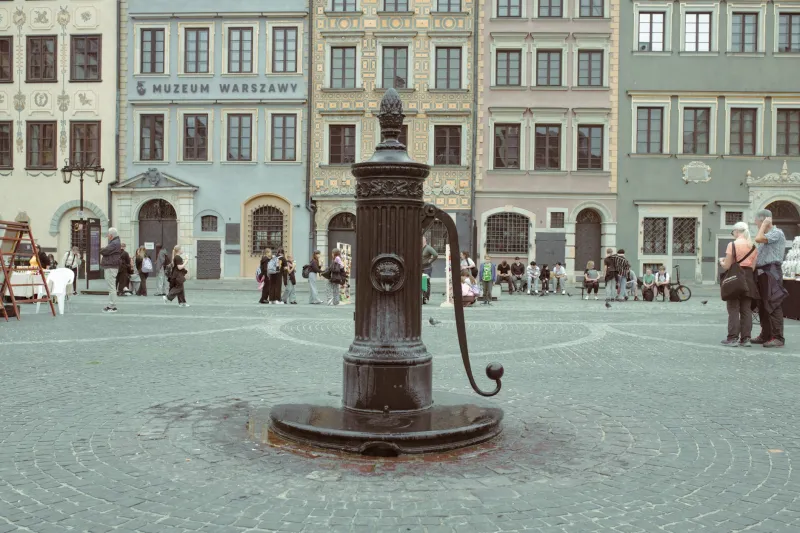
The obvious place to begin is the old square, where the most ornamental fountain still stands. Ours is the sort of Victorian gift that arrives with a plaque, a temperance pledge and a touch of civic showing-off. These structures were often donated by reformers who wanted a respectable alternative to the pub, and by councils keen to look modern. The stonework may be weathered, but the idea is still legible: water as a shared amenity, not a commodity.
Access notes matter here. The basin is low enough for most adults and older children, but the spout is stiff and the surrounding paving can be slippery after rain. There is a bench within sight, which makes it a good stop for anyone walking with a flask, a dog or a grandparent. The fountain runs on mains water and is checked by the council’s street scene team, though in practice it is often the nearby café staff who notice when it stops.
The practical middle stretch
From the square, head towards the churchyard and the recreation ground. This is where the walk becomes useful rather than merely picturesque. The churchyard tap is plain, modern and easy to miss, tucked beside a gate and a noticeboard. It is not beautiful, but it is reliable, and on a hot afternoon it does more public health work than any polished monument. The recreation ground has a bottle filler near the play area, installed after a local campaign and now used by dog walkers, football coaches and people filling up before the bus home.
This is the part of the route to think about accessibility. The path from the square to the churchyard is level and wide, but the recreation ground entrance has a slight lip and the filler is set at two heights. That is good practice: one for adults, one for children and wheelchair users. The bin beside it is not always empty, which is a small reminder that a fountain is only half the job. The other half is the maintenance rota behind it.
What the Victorians left us
The Victorian and Edwardian fountains on the route are not just decorative. They are part of a longer argument about who gets to be comfortable in public. Temperance donors often framed them as moral gifts, but they were also practical ones. A working person could drink without buying anything. A child could drink on the way to school. A visitor could drink without being a customer.
That principle is worth defending in 2026. Free water is not a luxury or a quirky heritage extra. It is a small, dignified form of hospitality, and it matters more as summers get warmer and public spending gets tighter. A town that keeps its fountains flowing is saying something about the kind of place it wants to be.
A civic plea in a bottle-filling age
Modern bottle fillers are less romantic than a Victorian stone fountain, but they are arguably more useful. They are quicker, cleaner and easier to maintain. They also fit the way people actually move around town: with a reusable bottle, a bus pass and perhaps a dog on a lead. The best ones are signed, shaded and close to seating. The worst ones are hidden behind a locked gate or switched off for months without explanation.
So the fountain round is also a gentle audit. Are the spouts clean? Is the drainage working? Is there a bin nearby? Does the tap run freely enough to fill a bottle without a struggle? Could a wheelchair user reach it? Is there a bench within sight? These are not fussy questions. They are the difference between a nice idea and a working public service.
How to walk it
Start mid-morning, take a bottle, and wear shoes you do not mind getting slightly wet. The loop is pushchair-friendly apart from one short gravel stretch, and there are public toilets near the recreation ground. Dogs are welcome on leads, though they will need their own bowl at the modern fillers. If you are doing the walk in colder weather, the fountains still make a good excuse for a leg-stretch and a look at the town’s older street furniture. In summer, go early or late and treat the taps as refuelling stops rather than a destination.
And if you find one that is broken, do say so. Report it to the council, mention it to the café, tell the friend who sits on the town forum. The fountain round only works if the town treats free water as part of the everyday infrastructure of belonging. Still flowing, still free, still worth a walk — and still worth defending.