Kerb Appeal: A Wheelchair User’s Saturday Scorecard for the Old Quarter
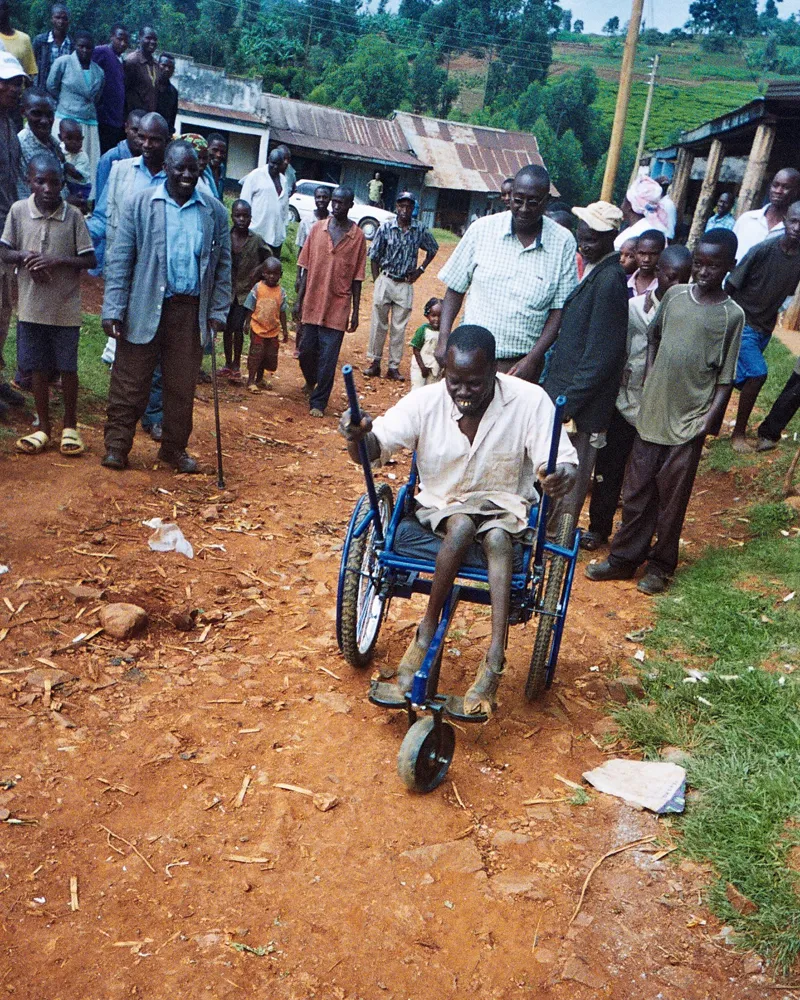
Photo: Engineering for Change, CC BY-SA 2.0, via Wikimedia Commons
Saturday morning, and I am doing what any sensible person does with a free day: auditing kerbs. My wheelchair and I have a route planned through the heritage quarter — the bit of town with the old market cross, the churchyard gate, the museum, the tea room and the street that looks lovely in photographs and slightly terrifying in person. The aim is not to hand out gold stars or red cards. It is simply to count what is there, notice what is missing, and come away with a practical map of how reachable our oldest streets really are in 2026.
Because heritage is only truly public when everyone can reach it. That sounds like a slogan, but it is also a very ordinary test. Can I get from the bus stop to the museum door without having to ask a stranger for a lift over a kerb? Can I pause halfway without blocking the pavement? Can I use the loo without a detour across town? These are not luxury questions. They are the difference between a place you visit and a place you belong.
Why a kerb census?
I have done the complaint version of this walk. It is exhausting, and it usually ends with me feeling like the problem. So this time I tried something friendlier: a census. A census does not shout. It counts. It records the good bits, the odd bits and the bits that make you sigh. It also gives other people something useful to act on — volunteers, shopkeepers, councillors, anyone who has ever said, ‘I didn’t realise that was an issue.’
My wheelchair has front castors with opinions. They notice a dropped kerb that is not quite flush. They notice gravel, loose paving, a two-centimetre lip that looks like nothing until you hit it at an angle. By the end of the morning, my notebook has more entries than my phone has steps. But the picture is not gloomy. It is just detailed.
The route, roughly
I started at the bus stop near the top of the high street, looped through the market square, crossed to the churchyard, went along the old coaching street to the museum, and finished at the tea room by the heritage noticeboard. It is maybe half a mile. It took me two hours, which tells you something in itself.
The first stretch was genuinely good. The crossing outside the pharmacy has a proper dropped kerb on both sides, the pavement is wide enough for two wheelchairs to pass, and there is a bench with arms about every hundred metres. I noted that. It matters. When people ask what accessible design looks like, it often looks like nothing: a flush kerb, a flat bit of pavement, a place to rest. You only notice it when it is missing.
The market square was mixed. The cobbles are beautiful and horrible in equal measure. I am not going to pretend otherwise. But the council has put a smooth strip around the edge, and if you follow it, you can cross the square without feeling like a marble in a bag. That is a clever compromise. It does not ruin the look of the place, and it gives wheels a fair chance. I would like more of that kind of thinking.
What worked
The museum was the highlight. Not just because it has a ramp — though it does — but because the ramp is obvious, the door is wide, and someone has thought about the turn into the ticket desk. The staff member saw me hovering and did not make a fuss. She just said, ‘The accessible loo is on the left, and the lift is behind the shop.’ That is the gold standard, really: information offered before you have to ask.
The churchyard path was also better than I expected. It is firm, mostly level, and there is a gate that opens wide enough. The bench near the yew tree has a back and arms, which makes getting up again much less of a negotiation. I sat there for ten minutes and watched two volunteers clearing leaves. They had left a clear route through, which sounds small and is not.
The tea room deserves a mention too. The threshold is a low one, the doorway is wide, and the staff moved a chair without being asked. They also had a proper accessible loo, not a cupboard with a handrail. I ordered a pot of tea and felt, for a moment, like a customer rather than a obstacle course.
The small barriers
The barriers were mostly small. That is the frustrating bit. A dropped kerb that drops you into a puddle is just a puddle with ambition. A ramp that is steep enough to need a run-up is not really a ramp. A sign outside a shop that narrows the pavement to less than a metre is a problem, even if it is only there for an hour.
There was one crossing where the dropped kerb on the far side was misaligned by about half a metre. Half a metre does not sound like much until you are trying to cross with a car waiting. There was a stretch of pavement near the coaching street where tree roots had lifted the slabs into a small mountain range. There was a ‘temporarily closed’ accessible loo that had been temporarily closed, according to the sign, since August. And there was a step into a shop that had a ramp inside, leaning against the wall, unused. The ramp was there. It just was not out.
None of these are disasters. They are maintenance issues, communication issues and habit issues. They are also exactly the kind of things that a Saturday volunteer team or a quick council fix could sort before the next heritage open day.
The scorecard I used
If you want to run your own rolling audit, keep it simple. I used six categories and a Green, Amber or Red rating for each. You do not need a clipboard. A notes app is fine.
- Kerbs and crossings: Are dropped kerbs flush, aligned and free of puddles? Can you cross without a detour?
- Path surfaces: Are pavements smooth enough for small wheels? Are there loose stones, roots or badly patched slabs?
- Entrances and thresholds: Is there a ramp or level access? Is the door wide enough? Is the ramp actually out?
- Rest points: Are there benches with arms and backs? Are they spaced often enough for a slow walk or a wheelchair push?
- Facilities: Is the accessible loo open, clean and clearly signed? Is there a Changing Places facility nearby if needed?
- Information: Are staff aware of access routes? Is there a map that shows them? Do you have to ask three times?
I scored the heritage quarter as mostly Green on crossings and rest points, mixed Amber on surfaces and entrances, and Red on facilities — not because there are none, but because the one accessible loo in the middle of the route was closed. That single red mark changed the shape of my morning. I cut the walk short. That is what access does: it does not just affect one stop, it affects the whole day.
Easy wins for the next Saturday
There are some fixes that need money and machinery. There are others that need a broom, a sign and twenty minutes. The easy wins are worth naming first. Clear the leaves and gravel from dropped kerbs. Move A-boards inside during busy periods. Put the ramp out before opening, not after someone asks. Check that the accessible loo is actually open and that the sign is not a lie. Add a bench with arms where there is space. Put a simple access map on the heritage noticeboard, with the loo, the ramp and the resting points marked.
None of this is asking for the moon. It is asking for the kind of thoughtfulness that makes a high street feel cared for. And frankly, it is good for everyone: families with buggies, older residents, people with luggage, anyone who has ever been tired. Accessibility is not a niche. It is a public good.
Run your own rolling audit
If you fancy doing this on your own street, go at a quiet time, take a notebook and keep it good-humoured. Note what works as well as what does not. Take photos of the easy wins — the ramp that is out, the bench that is clear, the crossing that is flush. Send the list to your local councillor, the heritage group or the town council. Or just put it on the community noticeboard. The point is to make the invisible visible, one kerb at a time.
By the time I got home, my wheels were muddy and my notebook was full. I had counted 34 dropped kerbs, 11 benches, four ramps, one closed loo and a great many uneven slabs. I had also had a pot of tea, a chat with a volunteer and a proper look at the old coaching street. The heritage quarter is not inaccessible. It is just not yet consistent. And consistency, happily, is something we can build together — one small, sensible fix at a time.