Where the Water Waits: A Wet Walk with a Notebook
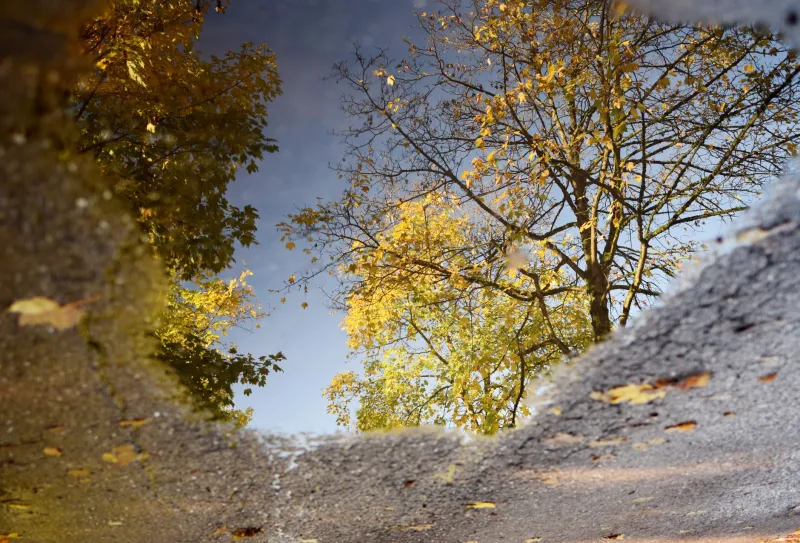
The rain stops just before nine. The high street is still wearing it — dark patches on the pavement, a shine on the kerb, a bus shelter dripping in a steady, polite sort of way. And there, by the crossing, is the first puddle. Not a dramatic lake. Just a wide, shallow pool that asks every pushchair, wheelchair and hurried pedestrian to make a small decision: go round, go through, or go back.
Most of us step around and forget it. But a puddle is a piece of temporary geography. It tells you where the ground dips, where the drain is slow, where the leaves have gathered, and where a route quietly stops being easy for some people. That’s the idea behind a citizen-led puddle audit: a wet-weather walk with a notebook, a phone camera and a bit of civic curiosity.
It isn’t about pointing fingers at the council, or pretending every damp patch is a scandal. It’s about noticing. And noticing, it turns out, is one of the friendliest things you can do for a place.
Start at your own front step
You don’t need a clipboard or a hi-vis jacket. You need boots, a coat and maybe twenty minutes. Go out an hour or two after rain, while the water is still doing its thing. Take a phone for photos and a notebook — or just use the notes app, like a sensible person in 2026.
Begin with the routes you already know. The walk to the school gate. The cut-through to the station. The pavement outside the library. The path to the GP surgery. These are the everyday lines people trace without thinking, and they’re exactly where puddles matter most.
At each one, jot down a few simple things. Where is it? Roughly how big? Is it shallow or deep enough to cover a shoe? Is there a drain nearby, and is it clear? What’s around it — a dropped kerb, a crossing, a bus stop, a bench, a tree pit? Does the water sit in the road, on the pavement, or right where people need to step?
You’re not producing a scientific survey. You’re building a picture.
The route tells a story
A wet walk quickly shows you how a street slopes. Water gathers in the low points, and those low points are often exactly where people are expected to cross, wait or queue. A puddle by a quiet back lane is one thing. A puddle across a dropped kerb is another. A puddle that forces a wheelchair user into the road is a different kind of problem entirely.
Look at the camber of the pavement. Look at the drain grates. Some are clear; some are wearing a little hat of leaves and crisp packets. Look at tree pits and planted areas — sometimes they help soak water away, sometimes they’re compacted and shed it straight back onto the path. Look at the old kerbstones and gutters in older parts of town, too. Some of that drainage is quietly doing a job it was never designed for, and doing it rather well.
This is the practical bit: note the repeat offenders. A puddle that vanishes an hour after rain is weather. A puddle that lingers for days is information. In winter, it’s also a potential ice patch. If you spot standing water that stays put, smells odd, or sits near a busy crossing, take a photo and a note. Then report it through the council’s website rather than only complaining into the void of social media. A location, a photo and a short description are far more useful than a general grumble.
What counts as a problem?
Not every puddle needs fixing. Some are harmless. Some are even quite beautiful — a bit of sky on the pavement, a reflection of the church tower, a temporary pond for a very confused pigeon. We don’t need to sanitise every wet corner of the town.
But accessibility matters. A route that works for most people on a dry day should not become a obstacle course after rain. Ask yourself who uses this path. Parents with buggies. People with shopping trolleys. Older neighbours with sticks. Cyclists. Wheelchair users. People who are partially sighted. A puddle that makes them step into a busy road is not just a puddle; it’s a small failure of care.
And care is often cumulative. A cleared drain, a swept path, a repaired gully, a raised crossing — these are not glamorous fixes. They don’t make headlines. But they make a place feel considered. They say: someone has thought about you when it rains.
The quiet pleasure of a wet walk
There’s a wellbeing angle here too. Wet streets are quieter. Sounds soften. The high street looks different in the rain — more reflective, more atmospheric. You notice things you’d normally walk past: the way water runs along a gutter, the smell of wet stone, the little rivers finding their way between leaves.
It’s also a gentle way to feel connected to where you live. You’re not sitting in a meeting or filling in a form. You’re just walking, looking and writing things down. That counts. In 2026, when so much of civic life happens on screens, a damp notebook and a pair of wet boots can feel oddly radical.
So next time the forecast turns grey, give it twenty minutes. Walk your usual route with different eyes. Note three puddles. Report one that needs attention. Say hello to the person doing the same dance around the water at the bus stop. The town will still be imperfect — most towns are — but you’ll know it a little better. And that’s where care starts.