The Bench, the Bus and the 20mph Sign: One High Street's Slow Experiment
The high street as somewhere to linger
There is a moment, around 10.40 on a damp Tuesday, when a high street either works or it doesn't. The bus has just pulled away. A delivery van is reversing. Two people are waiting to cross at a spot with no dropped kerb, and a third is standing outside a bakery because there is nowhere to sit. Nobody is dawdling. They are all trying to get somewhere else.
The forty-five minute rule, as one organiser in a south Midlands market town put it to me, is less a by-law than a question: can your high street give someone a pleasant forty-five minutes without them spending much money? If not, it may be a corridor with shops attached. That is the idea behind a small wave of 'slow town' experiments in the UK — not a grand masterplan, but a set of cheap, reversible changes designed to make staying put feel possible.
I spent a fortnight on one high street I'll call Wrenford, watching what worked, what didn't and what was really just a nice photo for the parish newsletter.
A small experiment, not a masterplan
Wrenford's trial was deliberately modest. The council put in a temporary 20mph zone for six weeks, painted nothing permanent and promised to remove everything if shops objected. Volunteers carried out a bench-and-tree audit, counting seats, shade, shelter and gaps between them. Three cafés were encouraged to put tables on the pavement facing the street rather than tucked against the window or turned towards a wall. A handful of planters appeared where the road narrowed.
Total cost: less than a used hatchback. The ambition: to see whether designed-in dawdling might lift wellbeing and footfall, or at least stop people treating the pavement outside the chemist like a slalom course.
The first thing to say is that the signs alone did very little. Drivers treated the 20mph plates as a suggestion, especially before 9am. The second thing is that the benches did much more than anyone expected. Once volunteers mapped them, the pattern was obvious: plenty of seats near the war memorial, almost none between the bus stop and the butcher, and two benches that faced a wall.
What changed — and what it cost
The most visible change was the café furniture. Two tables outside the bakery, angled towards the street, turned a stretch of pavement into a place where people paused. Not in huge numbers. But the difference between a table facing a wall and a table facing the high street is the difference between waiting and watching. Watching is the beginning of belonging.
The 20mph zone was patchier. Shopkeepers reported that traffic did slow in the middle of the day, when the street is busiest. At school run time, it didn't. One trader told me the sign was 'a nice photo for the parish newsletter' and nothing more. Another admitted that the slower traffic had made it easier to hear customers and easier for customers to hear each other. That is not nothing.
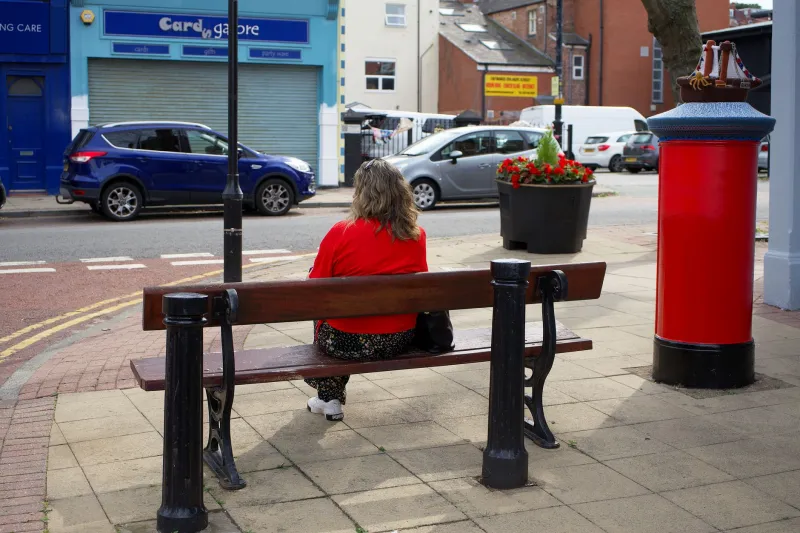
The bench audit produced the most practical results. Volunteers found nine benches in the trial area, but only three were in sun for most of the day, two were broken and one was technically on private land. They also found that the gap between the bus stop and the nearest usable seat was 180 metres — fine for me, less fine for someone with a stick or a toddler. A single new bench, donated by a local family and installed by the parish council, has since become the most-used piece of street furniture in the trial area.
Where it stumbled
The planters were a mistake. They looked lovely in the photos and narrowed the pavement just enough to make life difficult for wheelchair users and parents with buggies. One shopkeeper said deliveries became 'a game of Tetris with a van'. The council moved two of them within a week. The lesson was not that greening a street is wrong, but that a bench is easier to get right than a planter.
The café tables also needed a licence, a fact nobody had mentioned until week two. One café owner gave up rather than fill in the form. Another put out two chairs and a small sign saying 'Please sit — we'll bring it out'. That sign did more for street life than the official trial signage.
And the temporary 20mph zone suffered from a classic problem: it was too temporary. Drivers who use the road every day quickly learned that the signs were not enforced. The council had no budget for cameras. The police had no capacity. The zone became a suggestion, and suggestions are easy to ignore when you are late for the school pick-up.
A test you can run on your own street
You don't need a council trial to find out whether your high street is designed for lingering. Try these checks on a normal weekday morning:
- Walk at a genuinely slow pace — roughly 2mph — from the bus stop to the far end. Note where you feel exposed, rushed or in the way.
- Count the benches. Then count how many are usable, in shade or sun as you prefer, and within sight of a bus stop or toilet.
- Stand outside a café. Are the tables facing the street or the wall? Do people look at the street or at their phones?
- Time the crossing. If you have to wait more than 45 seconds at a pedestrian crossing with no refuge, the street is telling you to hurry.
- Check the dropped kerbs, the pavement width and the delivery times. A street that works for a van may not work for a wheelchair or a buggy.
- Ask three shopkeepers what would make them stay open an hour later. Their answers are usually cheaper than a masterplan.
The verdict: slower, not sleepy
The honest verdict from Wrenford is that small changes can shift behaviour, but only when they are repeated and maintained. The bench worked. The café tables worked once the paperwork was sorted. The 20mph zone worked in patches and failed where it was not backed by design or enforcement. The planters failed until they were moved.
Did the trial lift wellbeing? The evidence is soft — a few more people sitting, a few more conversations, a shopkeeper who now knows the name of the man who feeds the pigeons. Did it lift footfall? Not dramatically. The high street is still a corridor for most people. But a corridor with a bench is a slightly kinder corridor.
The forty-five minute rule is worth testing because it asks a useful question: who is your high street for? If the answer is 'people passing through', the benches and the café tables will look like clutter. If the answer is 'people who live here', they start to look like civic infrastructure. Wrenford hasn't become a slow town. It has become a town that noticed its own pace. That is a smaller thing, and a more honest one.