The Brass Plaque Test: Who Our Streets Remember, and Who They Don't
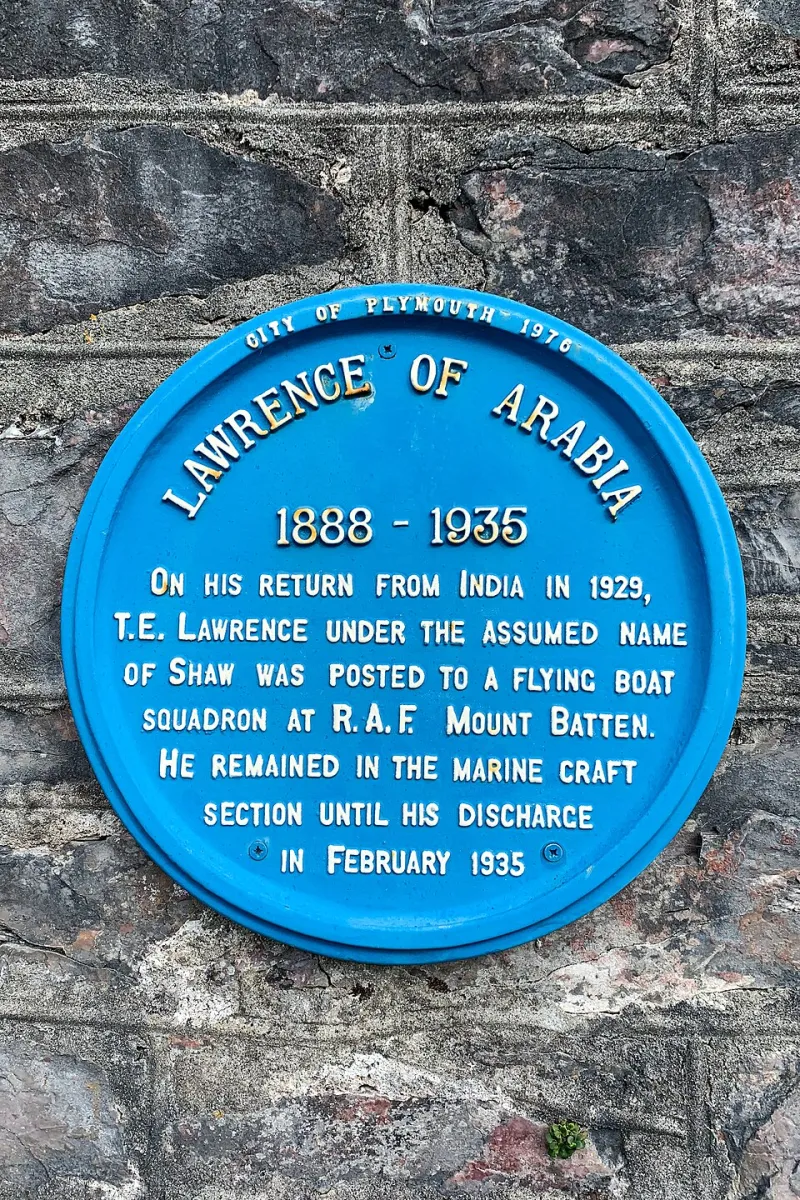
Photo: .mw-parser-output .messagebox{margin:4px 0;width:auto;border-collapse:collapse;border:2px solid var(--border-color-progressive,#6485d1);background-color:var(--background-color-neutral-subtle,#fbfcff);color:var(--color-base,#202122);box-sizing:borde
Walk along the older end of almost any British town and you'll meet them sooner or later. A blue circle on a brick wall. A slate tablet bolted to a shopfront. A brass plate on a rebuilt pub, green at the edges. Somebody, at some point, sat in a meeting and decided that this particular spot mattered. Somebody else, at some other meeting, decided it didn't.
That's the thing about commemorative markers. They present themselves as facts. In practice they're arguments — settled ones, mostly, which is why we stop noticing them.
A plaque is never just a plaque
Take a wander down your own high street and count the markers. Then count the gaps. The war memorial will be there, immaculate. The Victorian philanthropist who paid for the library will be there. The corner where a hundred people died in an epidemic, or where a strike began, or where a community first gathered after arriving from the other side of the world — probably not.
None of this is a conspiracy. It's just how memory works when it's administered by committees. Plaques tend to go to people with documented lives, surviving photographs, and someone willing to fill in the form. Fame helps. Property ownership helps enormously. Being dead for more than twenty years helps, because nobody can be embarrassed.
In London, where the English Heritage scheme has been running in various forms since the 1860s, roughly one in seven plaques commemorates a woman. Campaigns have nudged that figure upward, and the last few years have seen some genuinely good additions. But the imbalance tells you something about whose paper trails survived, not whose achievements mattered.
Who actually runs these things
There is no single national plaque authority, which surprises people. English Heritage's famous blue plaques are a London scheme. Outside the capital, most markers come from a patchwork: civic societies, local history groups, town councils, universities, business improvement districts, a Rotary club with a good treasurer, or a family who simply paid for one.
That means standards vary wildly. Some schemes have panels and evidence requirements so strict they'd make an archivist weep. Others are looser — essentially, if the story is defensible and the building owner agrees, up it goes.
This is good news if you've got a candidate in mind. It's also the reason one town has eleven plaques about its Victorian worthies and none about the women who ran its pubs, laundries and chip shops.
Why recognition isn't a small thing
There's a wellbeing argument buried under all this, and it's worth digging out.
When a town's public story includes you — your street, your trade, your grandmother's generation — something quietly settles. Planners call it place identity. Psychologists talk about belonging. Community workers just say that people look after places where they feel seen.
Councils have started to notice. Heritage-led regeneration, walking trails, oral history projects and local listing schemes are increasingly funded with wellbeing outcomes in mind, not just visitor numbers. A marker is cheap as civic interventions go, and it gives residents something to point at.
But there's a flip side. A plaque can flatter a place while the building underneath it rots. Commemoration is not the same as care. It's worth asking, gently, whether a town that can fund a plaque for a forgotten poet can also fund the library that poet would have used.
So you want to propose one
Here's a practical route, tried and tested by local groups up and down the country.
Find the gatekeeper. Ring the town council and ask who coordinates commemorative markers. If nobody does, try the civic society, the local heritage trust, or the library's reference desk. Someone always knows.
Check what already exists. Your council may hold a local heritage list — a register of buildings and sites with local significance, separate from national listing. It's a good signpost and sometimes a faster win than a plaque.
Build an evidence file. Birth, marriage and death records. Census returns. Newspaper archives. Photographs. Old maps. Two or three independent sources that corroborate the same story. Panels reject nominations far more often for thin evidence than for unworthy subjects.
Argue for local significance, not fame. A postwoman who organised the wartime collection point is a legitimate subject even if nobody outside the postcode has heard of her. The strongest plaques are specific.
Solve the boring problems early. Who owns the wall? Does the building need consent? Will the plate survive weather and scaffolding? Who is paying — a decent cast plate runs from a few hundred pounds into four figures — and who is maintaining it in ten years' time?
Nominate as a group. A school, a mosque, a tenants' association, a knitting circle. Applications with a community behind them are harder to shelve, and the process itself is a nice excuse for a get-together.
The awkward bit
Not every commemoration is a good idea. Some figures are contested, and pretending otherwise does nobody any favours. Some people, quite reasonably, would rather not have their lives turned into a sign. And a plaque can occasionally function as an alibi — a gesture that stands in for something a town should actually be doing.
None of that is a reason to stop. It's a reason to be honest about what markers are: partial, chosen, always revisable.
Start with a walk
Next time you're out, take the long way home. Note the plaques, and then note the absences. The corner shop that fed three generations. The hall where a union was founded. The house where a nurse lived who nobody thought to mention.
Somebody in your town decided who was worth remembering. There's no rule that says it has to stay that way.