The Names We Mumble: A 2026 Walking Guide to the Town's Trickiest Corners
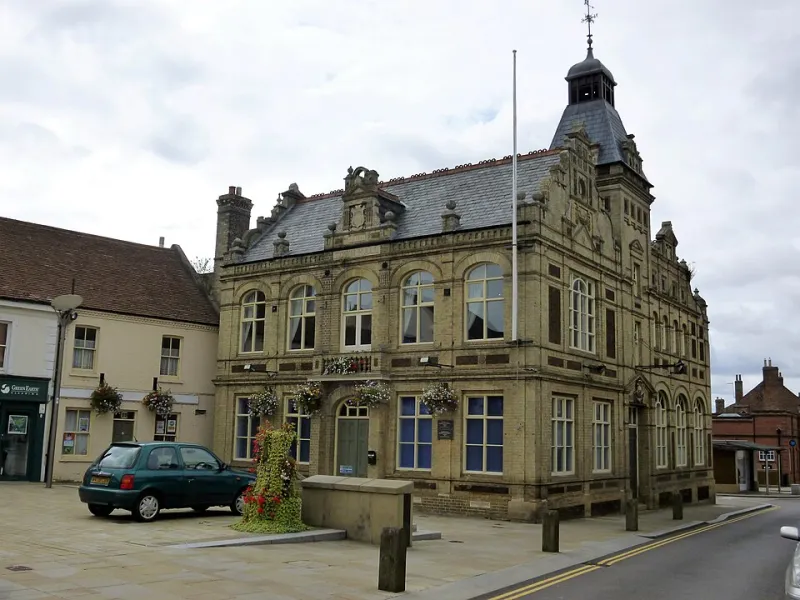
Photo: Stacey Harris , CC BY-SA 2.0, via Wikimedia Commons
There is a particular pause that happens when someone new reads a street sign aloud. It is not quite a stumble. It is more of a hopeful guess, delivered with the confidence of a person who has not yet been corrected. We have all done it. We have all been on the receiving end of a gentle, slightly delighted “actually, it’s…”
Place names are like that. They are small pieces of local heritage that we use every day without noticing, and they carry more history than most of us realise. So here is a light-hearted but properly researched guide to the names that trip people up — and a short walk that takes in five of them without ever feeling like a school lesson.
Why a name is never just a name
Most of our awkward place names are not awkward by accident. They are fossilised sounds. A spelling might have been fixed by a mapmaker, a tax record or a Victorian signpost, while the spoken version kept drifting along in the local dialect. That gap between what is written and what is said is where the fun lives.
Some names go back to Old English or Norse, when a “by” was a farmstead and a “hough” was a heel-shaped hill. Others carry the fingerprints of estate ownership, church dedications or a burst of nineteenth-century gentility. When we mispronounce them, we are usually not being careless. We are simply reading the letters instead of hearing the story.
And that is the thing about local pronunciations: they are not a test. They are an invitation. Learn one and you have learned a little about how this place has been lived in.
The glossary: five names to try before you go
Pronunciation respellings are always a bit approximate, so treat these as starting points rather than laws. Say them quietly to yourself. Then say them to a local and watch for the nod.
- Garrowby Lane — “GAR-uh-bee”, not “ga-ROW-bee”. The ending is the giveaway: the old Norse -by means a farm or settlement, and it nearly always softens in the mouth.
- Caudle Green — “CAWD-ul”, to rhyme with “waddle” without the w. Not “coddle”. The older vowel has survived here even though the spelling looks positively modern.
- Hough Bridge — “HUFF”. Yes, really. The letters at the end are doing almost nothing, which is exactly what happens to several Old English words ending in -hough.
- Fenwick’s Yard — “FENNicks”. The middle syllable disappears in the same way it does in a dozen British surnames. If you say “Fen-wick” you will be understood, but you will also be gently identified as a visitor.
- Belle Vue Terrace — “BELL view”. Not a French flourish. Just a Victorian builder’s aspirational spelling, pinned to a row of very sensible brick houses.
One more for luck: St Sepulchre’s is “SEP-ul-ker”, not “se-PUL-kree”. Church names are their own little dialect.
A short walk, five names, one hour
This route is about a mile and a half and should take an hour at a wander. It is mostly flat, with a couple of kerbs and one short slope. Go on a weekday morning if you can; the pavements are kinder then.
Start at Hough Bridge, where the old stone parapet is worth a look before you move on. Follow the lane uphill until you reach Garrowby Lane on your left. This is the stretch where the pronunciation lesson really begins, because the sign is clear and the local version is not.
Cut through Fenwick’s Yard — public access during daylight, but remember it is a working yard, so keep voices low and do not block the entrance. From there, head towards Caudle Green, which is less a green and more a widening of the road with a bench and a very good view of a chimney stack. End at Belle Vue Terrace, where the name is grander than the brickwork and all the better for it.
Along the way, look up. There are old maps in the library that show some of these names spelled differently, and one or two boundary stones that still carry abbreviations nobody uses anymore. This is heritage you can walk through without buying a ticket.
What the sounds tell us
The pronunciations are not random. They are a soft record of who lived here and what they did. The Norse endings speak of settlement. The dropped syllables speak of dialect. The church name speaks of a medieval dedication that has outlasted the building’s original windows. The terrace speaks of a moment when a builder wanted the row to sound smarter than it was.
That is why correcting someone is rarely the point. The point is the conversation that follows. A name is a tiny civic handshake. It says: you are here, and here has a way of saying things.
Record it before it fades
This year, we would love readers to help keep these versions alive. If your family says one of these names differently — or if you know a name we have missed — record a short voice note. Not a polished performance. Just the name, your street or area, and one sentence about where you heard it. Send it to us via the site, or drop it into the local heritage group’s inbox if you prefer.
If you are not a recorder, do the simpler thing: ask an older neighbour how they say it. Write it down. Say it back. You will be doing a small act of local conservation, and you will probably get a story out of it too.
And if you get one wrong in the meantime? Say it, smile, and listen for the correction. That is how everyone learns.